Everything you want to know about the English Goldendoodle.
About English Goldendoodles
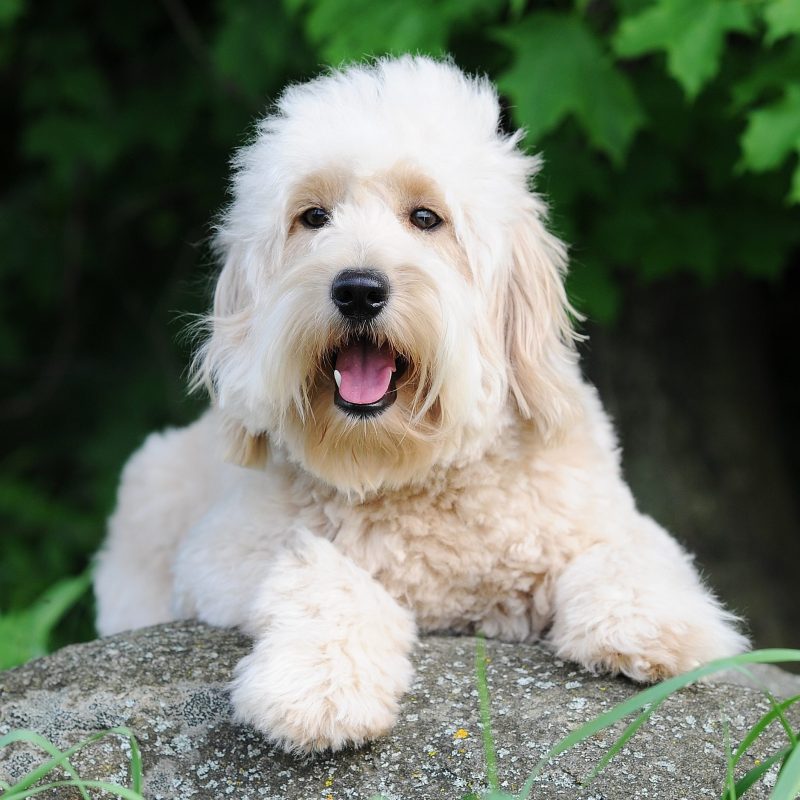
English Goldendoodles are the ideal family companion. They blend the clever and goofy personality of the Poodle with the calm, loyal, and loving nature of the English Golden Retriever. Their coats are low- to non-shedding, which makes them a popular choice for families with allergy concerns.
Since I began breeding English Goldendoodles in 1998, I’ve watched them grow from being almost unknown to becoming one of the most sought-after family dogs in North America. Often described as “people in fur coats,” Goldendoodles are full of charm and thrive on human companionship. They are affectionate, playful, fun-loving, and intelligent. Their sharp minds and eagerness to please make them easier to train than many other breeds, and I always here my clients saying that their English Goldendoodles graduate at the top of their obedience classes. They make the best therapy dogs and we use the English Goldendoodles most often for our service dog programs. They are the best starter dogs if you are a first time dog owner.
Whether you are welcoming your very first dog or simply want an easygoing, playful addition to your household, the English Goldendoodle is a wonderful choice. While they are not a purebred or registered breed, the qualities they bring into a family far surpass the importance of a pedigree.
The English Golden Retriever
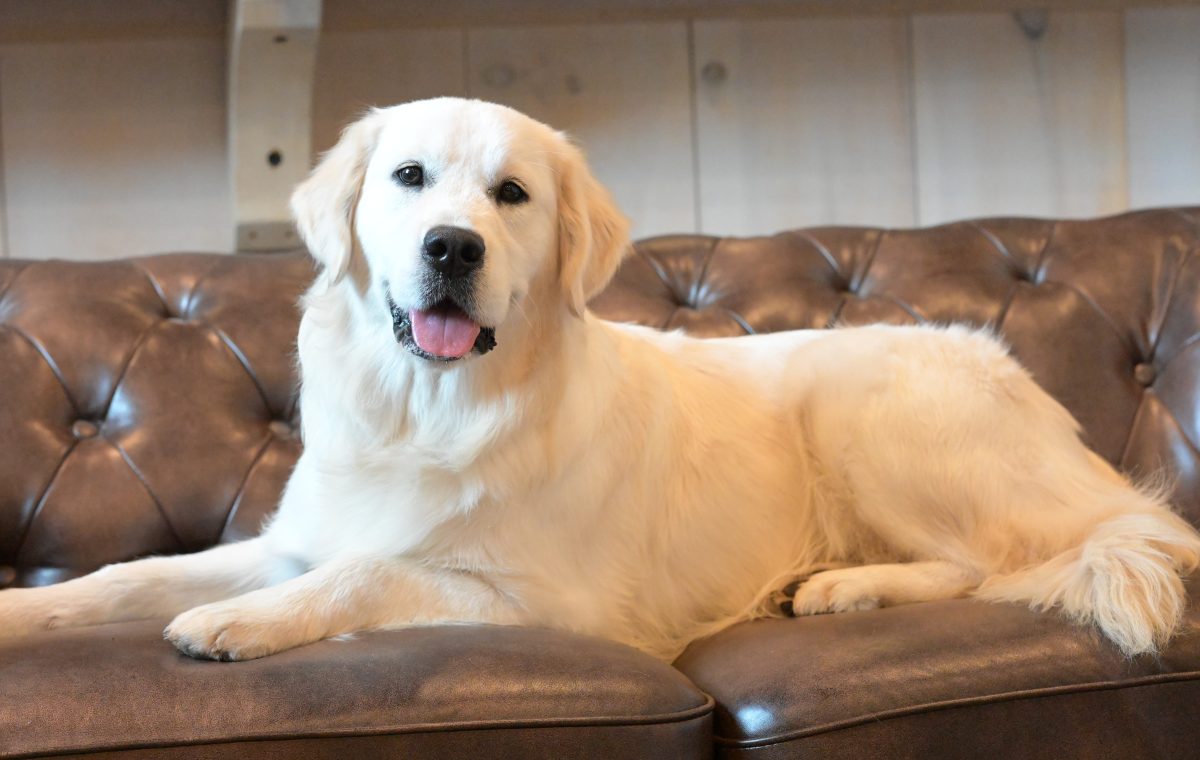
The English Golden Retrievers are the Retrievers we use in our breeding program because they are known for their laid-back and easy-going nature. This variety of Golden Retriever traces its lineage back to the United Kingdom and continental Europe. While all Golden Retrievers share their origins in Scotland during the 1800s, the English lines were bred to conform to The Kennel Club (UK) standards, which emphasize specific physical traits and temperaments.
They are distinguished from the American Retrievers by their lighter cream-colored coats, blockier builds, and calm and easy demeanor. Although the AKC (American Kennel Club) does not recognize “English” Golden Retrievers as a separate breed, they are registered through The Kennel Club (UK), the Fédération Cynologique Internationale (FCI), and other European registries.
The English Golden Retriever is best known for its gentle, calm, and affectionate personality. While all Golden Retrievers are naturally people-oriented, the English lines are best known for their gentle temperament and lower tendency toward hyperactivity. They are affectionate and loyal, bonding closely with their families and they love companionship. They are patient and nurturing, they are wonderful with children and are considered one of the best family dogs. Intelligent and eager to please, they are very trainable and respond well to positive reinforcement. They are very social and friendly, and usually very welcoming to strangers, other dogs, and even cats, and their balanced energy means they enjoy outdoor play and exercise but are usually calmer indoors compared to American Goldens.
Because of their calm and intuitive nature, English Golden Retrievers also excel as therapy and service dogs.
They are the perfect breed to mix with the fun and goofy characteristics of the poodle as this gives the English Goldendoodles a more stable temperament with the low shedding coat that is best for families with don’t want hair everywhere.
The Poodle
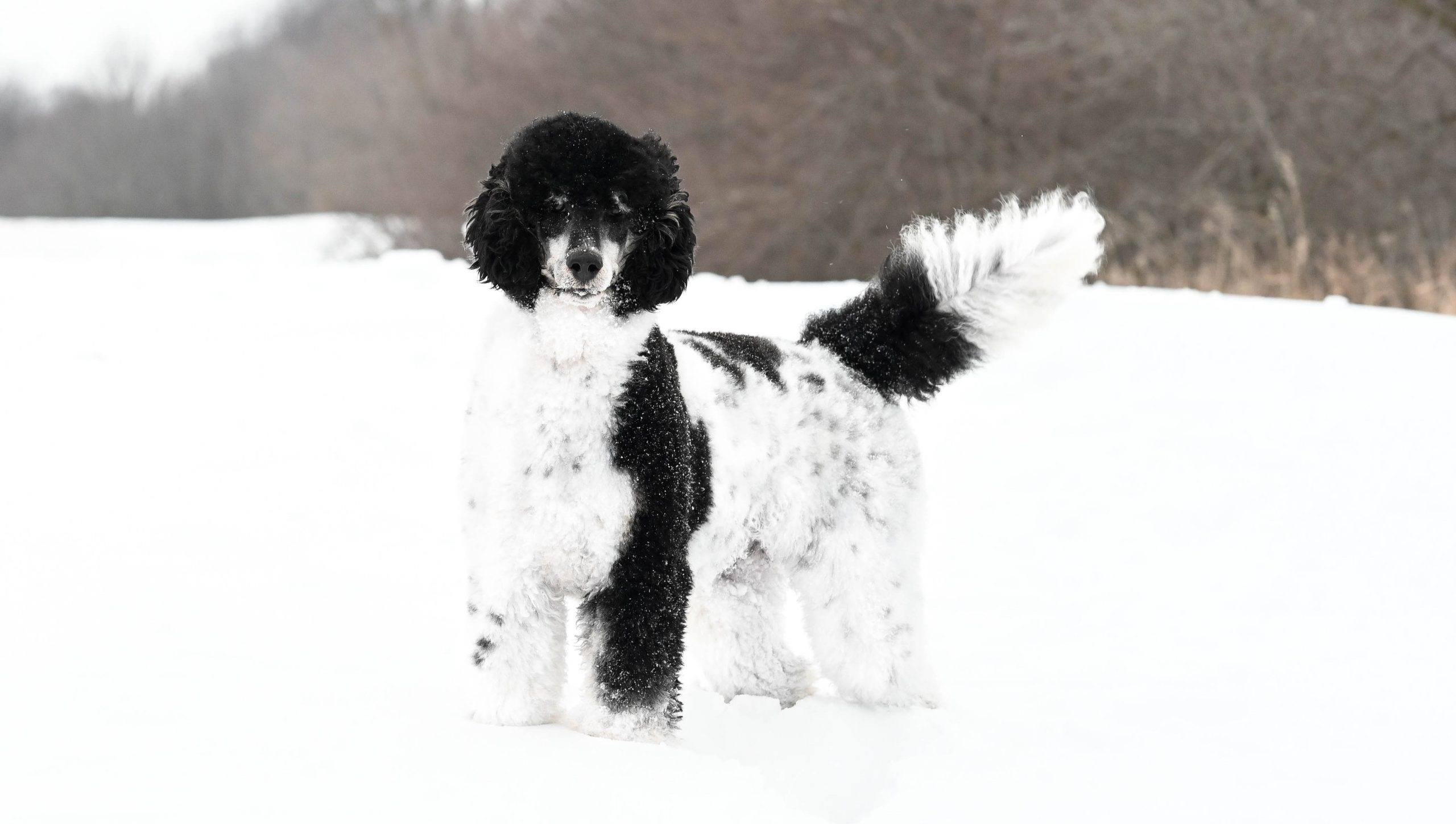
The Poodle is one of the oldest and most versatile breeds in the world. Although often associated with France, where it became a national symbol, the breed actually originated in Germany, where it was developed as a water retriever. The name “Poodle” comes from the German word pudel or pudelin, meaning “to splash in water.” Early Poodles were prized for their intelligence, athleticism, and exceptional retrieving ability, particularly in marshes and lakes. Over time, the breed was refined in France into the elegant, stylish dog that became synonymous with French culture, but its true roots are as a hardworking, hardy hunting dog.
Poodles rank high on the canine intelligence scale and excel in obedience. Most people are aware that this breed has a low- to non-shedding coat, making them a great choice for people with allergies. What people don’t realize is how lively and fun-loving Poodles can be. They are the clowns of the dog world, and it’s no coincidence they were used in circus acts for centuries.
Poodles are lively and playful, and have a prance to their walk. They thrive in a busy household where there is plenty of attention to go around. Vigorous exercise and ongoing training are the keys to managing the Poodle’s exuberance. If bored, Poodles may find their way into mischief. They are also quick to sound an alert and have earned a reputation for barking.
Poodles can be nervous and sensitive to stress, and are typically affected by eye, skin, and digestive diseases, as well as immune system diseases. The most common problems are bloat/torsion, thyroid issues, sebaceous adenitis, juvenile renal disease, hip dysplasia, and cancer.
Poodles come in three sizes and a wide variety of colors. They have a single layer of dense, curly fur that sheds minimally but will mat without proper care.
Goldendoodles vs. English Goldendoodles
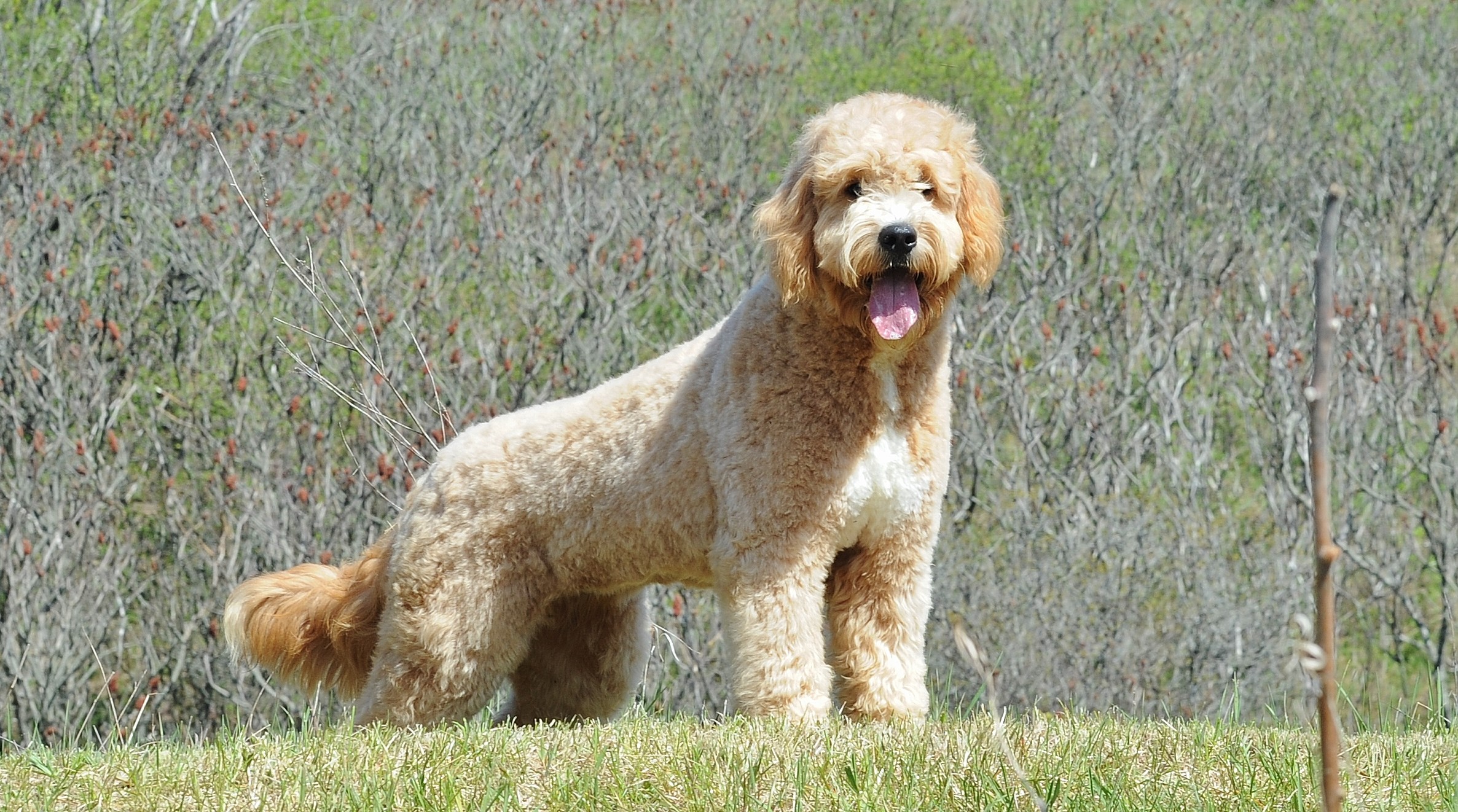
English Goldendoodles have a noticeably different look and temperament compared to Goldendoodles bred from American or field Golden Retrievers. The Retriever side of an English Goldendoodle comes from the English Golden Retriever, which originates in Europe. English Goldens are known for their lighter cream-colored coats (but this does also depend on the type of poodle used in the pairing), stockier builds, and calmer, more laid-back temperaments. In contrast, North American Golden Retrievers are typically darker in color, more slender in build, and carry a higher-energy, more active personality.
Because of these differences, English Goldendoodles typically inherit the calm, gentle, and easygoing nature of the English Golden Retriever while maintaining the intelligence, trainability, and low-to-non-shedding coat of the Poodle. This results in a dog that is easier to handle, beautifully built, and exceptionally suited as a family companion.
We deliberately breed only English Golden Retrievers in our breeding program and have traveled across Europe to acquire some of the finest European breeding stock to incorporate into our lines. By doing this, we ensure that our puppies consistently reflect the calmer, stockier, and more balanced traits that families are looking for.
It’s important to note that many breeders in the United States use field retrievers to produce their Goldendoodles. Field retrievers are bred for working ability in hunting and sport, which makes them more lanky, excitable, and hyperactive. While this may suit someone looking for a high-drive sporting dog, it often results in Goldendoodles that are more challenging for the average family to manage. This difference highlights why doing careful research into what type of goldendoodle you are getting is essential if you want a dog with the right temperament for your home.
Appearance
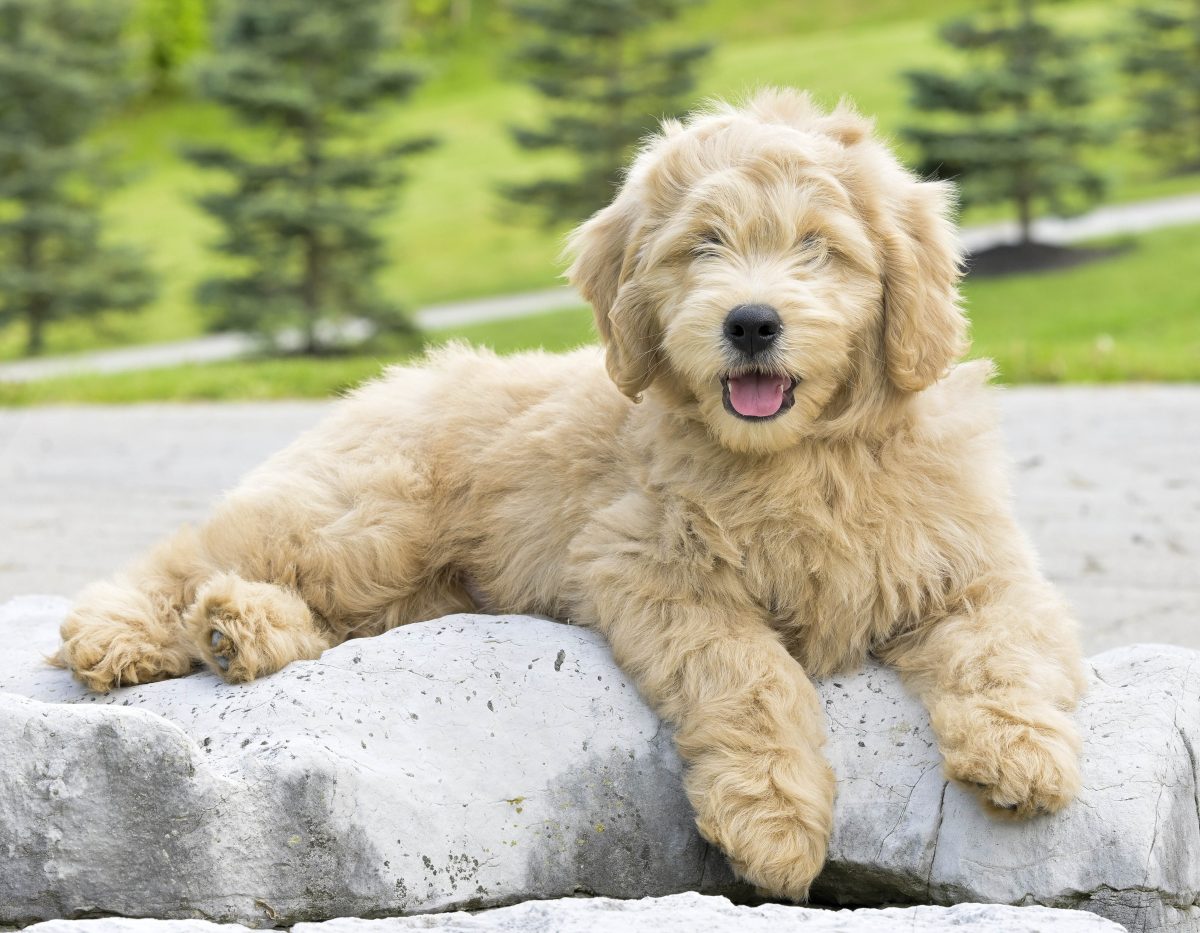
While many people assume English Goldendoodles are always cream/light golden in color (which is typical), they can come in a wide variety of shades including cream, apricot, black, silver, sable, phantom, and parti-colors. Their overall appearance is a beautiful blend of the Golden Retriever and the Poodle. Well-chosen parents tend to produce puppies with a consistent “look.”
The most common description of a English Goldendoodle is that they look like a shaggy teddy bear. Their round faces, expressive eyes, and soft coats give them an irresistibly cuddly and approachable look that families adore. Breeders often develop their own recognizable style of English Goldendoodle through careful selection of the parents. For example, a SwissRidge English Goldendoodle is typically stocky with a well-built frame, a beautiful head, and a soft, silky, wavy coat. This “signature look” sets them apart and you can usually pick a SwissRidge English Goldendoodle out of a crowd of dogs based on their adorable looks.
Coat
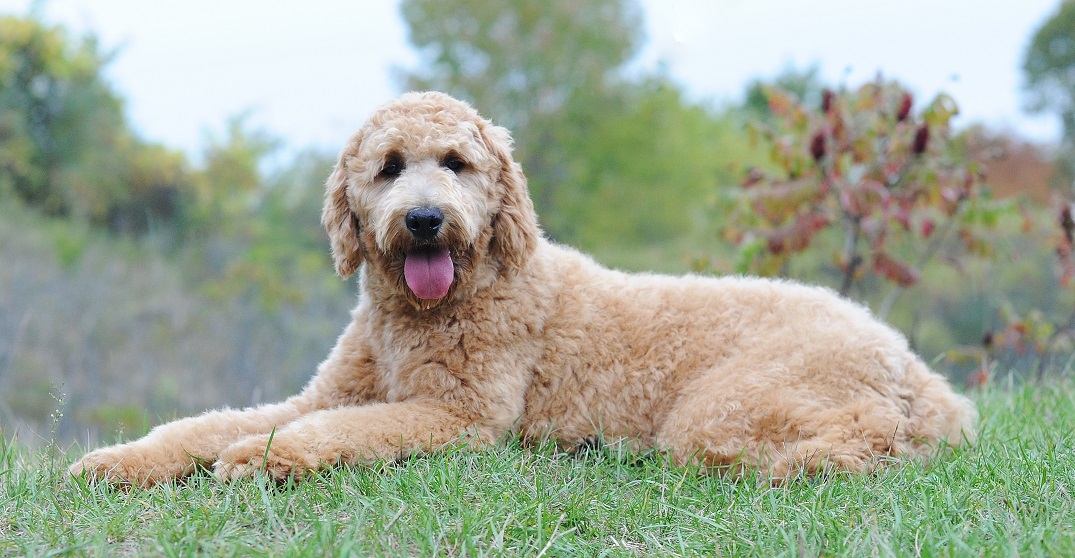
English Goldendoodles can inherit a variety of coat types, ranging from straight to wavy to curly. The majority have a wavy coats, which is soft, and sheds minimally, if at all. This is the most popular type and what we strive to breed towards, as it provides the “teddy bear” look while still being relatively low-maintenance compared to tighter curls. We can tell a puppies coat type through DNA testing or by seven weeks of age, and an experienced breeder can help families choose the coat that will best suit their lifestyle.
Curly-coated English Goldendoodles with 2 furnishing genes more closely resemble Poodles and are often the best match for families with more severe allergies, as they shed the least. However, these coats require more maintenance: daily brushing to prevent matting and professional grooming every 6–8 weeks. Straighter coats are lower maintenance but may shed more if they lack a furnishing gene, resembling a Golden Retriever’s coat.
For allergy considerations, most people with sensitivities to dog dander do well with wavy or curly coats (with one or two furnishing genes), though every person’s allergies are different. It’s important to note that individuals allergic to dog saliva will likely react to all English Goldendoodles, regardless of coat type, although choosing a smaller-sized English Goldendoodle may help since they naturally produce less saliva.
Because most English Goldendoodles shed very little, their coats require regular maintenance. With a coat that continues to grow, mats can easily form. Routine brushing and professional clipping are essential to keeping their coats healthy, comfortable, and beautiful.
Sizes
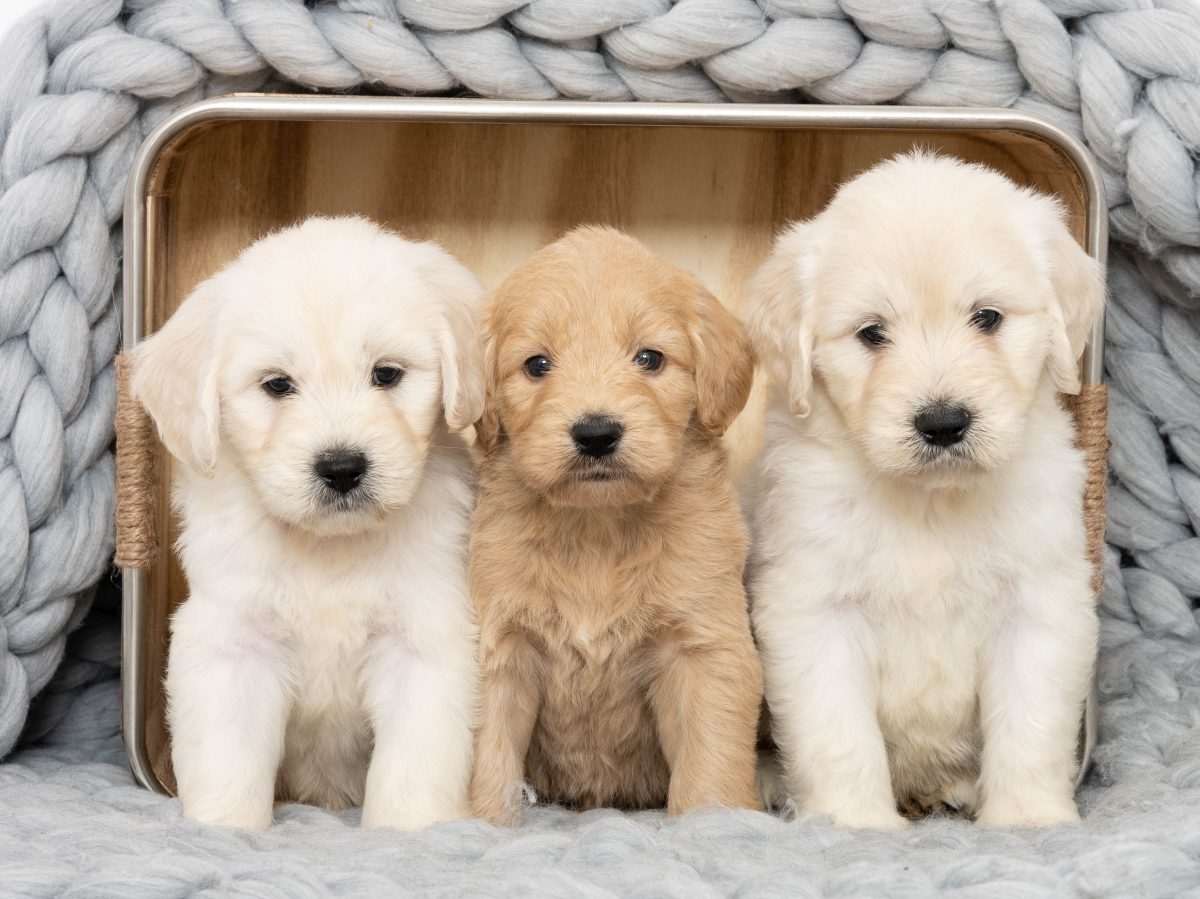
English Goldendoodle come in different sizes, depending on the parents and the vagaries of genetics. Females are usually smaller than males.
- Standard: 22 – 29 inches at the shoulder, 66+ lbs
- Medium: 18 – 21 inches at the shoulder, 46–65 lbs
- Miniature: 14 – 17 inches at the shoulder, 26 –45 lbs
- Tiny: 10 – 13 inches at the shoulder, 10 –25lbs
These ranges capture the averages, but sometimes a pup will fall outside the expected height and weight.
In terms of temperament, mini and tiny English Goldendoodles may have a slightly higher energy level than the standard, to reflect the same in the miniature and toy poodle parents. .
Different Generations
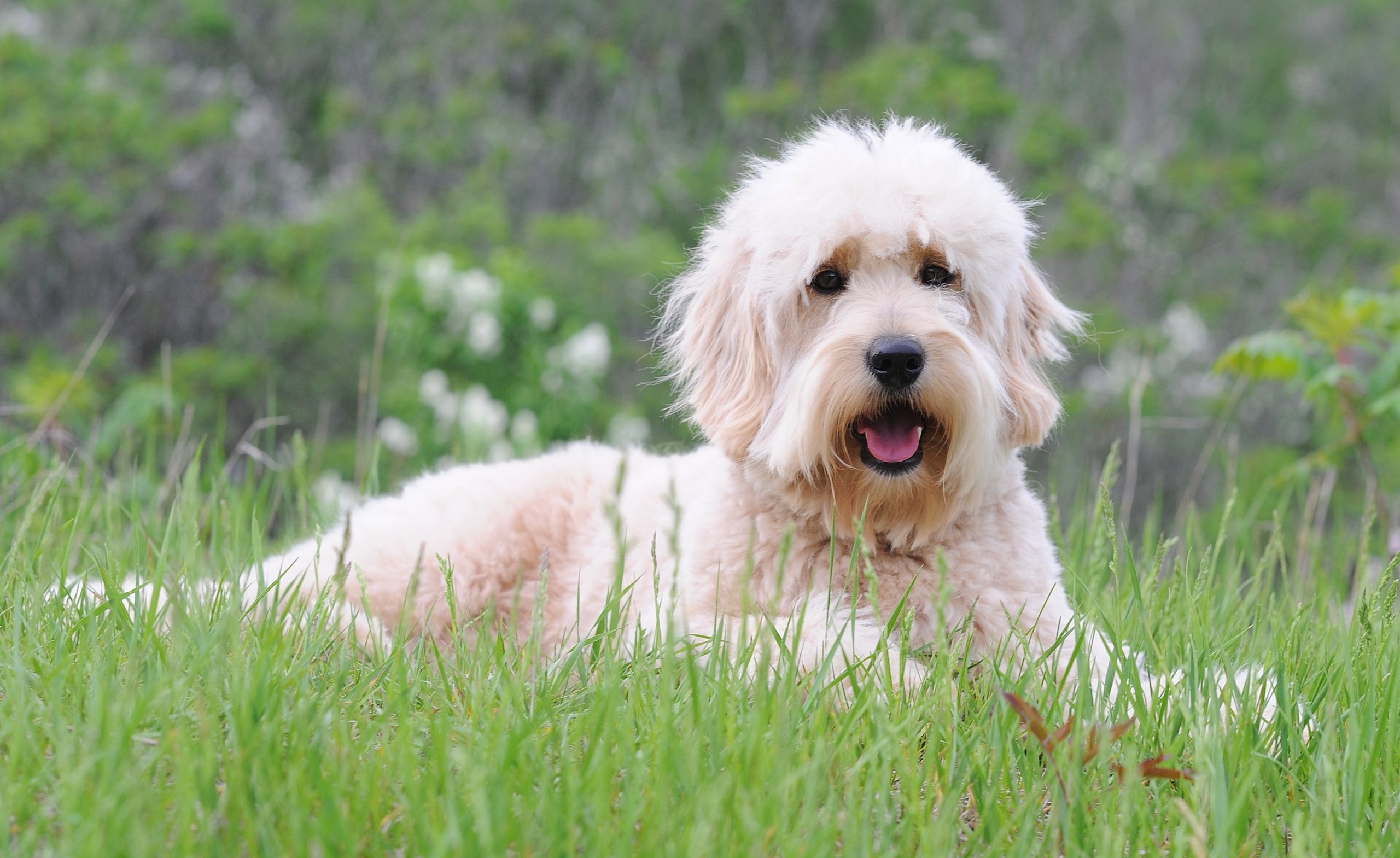
F1 English Goldendoodle
An F1 is a first-generation cross in which the puppy is 50 percent English Golden Retriever and 50 percent Poodle. This generation is often considered the healthiest because the parents come from two distinct gene pools, which reduces the likelihood of passing on common hereditary conditions..
F1B English Goldendoodle
An F1B is a backcross, meaning an F1 Goldendoodle is bred with a Poodle. The resulting puppy is approximately 25 percent Golden Retriever and 75 percent Poodle. F1B puppies are the most likely to be low- to non-shedding and allergy-friendly, making them a popular choice for families with more severe allergies. Some breeders also backcross with a Golden Retriever instead of a Poodle, producing a dog with stronger Golden traits. However, this type of backcross tends to increase the likelihood of shedding, which is why I prefer not to breed it.
F2 English Goldendoodle
An F2 is a second-generation cross, created when two F1 Goldendoodles are bred together. Over time, if this is done for seven or more generations, breeders could apply to have the dogs recognized as a pure breed. With each successive generation, traits become more consistent, but hybrid vigor begins to diminish, and the genetic issues found in the original purebreds are more likely to resurface. Additionally, some F2 puppies may inherit an “improper coat,” lacking the fleece-like softness that makes doodles so appealing.
Multigenerational (Multigen) English Goldendoodle
A Multigen English Goldendoodle is any dog bred beyond the F2 generation, meaning multiple generations of English Goldendoodles are bred together. With careful, selective breeding, multigens offer the most consistency in appearance, temperament, and coat type. Breeders are able to refine desirable traits such as a soft fleece coat, low- to non-shedding qualities, and a balanced, family-friendly temperament. Multigens are often the most predictable option for families who want both the look and personality associated with English Goldendoodles, although they do not benefit from the same level of hybrid vigor as first-generation crosses.
Health and Lifespan
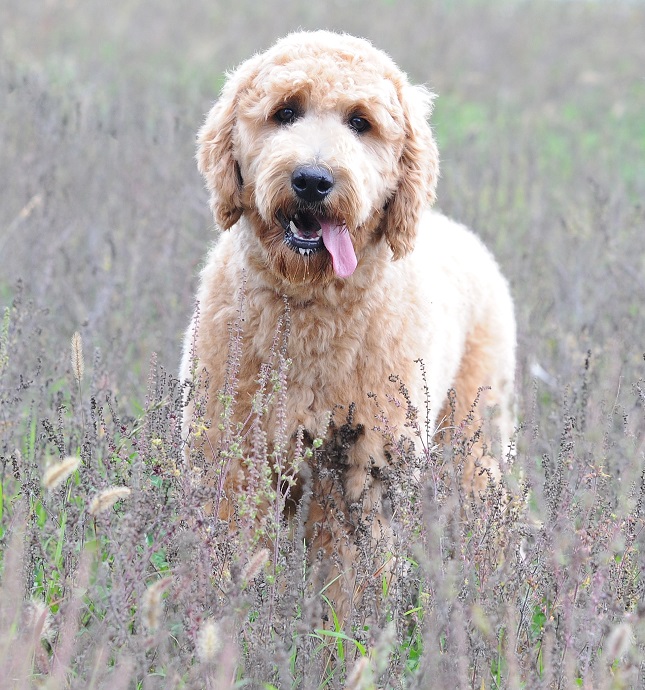
I have been breeding English Goldendoodles since 1998 and have consistently found them to be healthy, well-balanced dogs with relatively few health concerns. On average, my dogs live between 10 and 16 years, with smaller sizes generally enjoying longer lifespans than standards.
While English Goldendoodles are typically healthier than their parent breeds thanks to hybrid vigor, they can still be prone to certain conditions. These include hip and elbow dysplasia, various eye disorders, and skin issues such as hot spots or allergies. Like many breeds, they may also develop cancer. Responsible breeders help reduce these risks through comprehensive genetic and orthopedic testing. It is important to ask your breeder to see test results of the parents health testing.
It’s important for prospective families to understand that reputable breeders invest heavily upfront to secure healthy breeding stock and to carry out the necessary testing. This significant investment is reflected in the purchase price of the puppy. While the initial cost may be higher, it greatly increases the likelihood of a healthier dog and can help reduce veterinary expenses in the long run.
Goldendoodle Mismatch
The English Goldendoodle is an amazing companion and would suit just about any family; with a few caveats:
- This is a very social dog that thrives on plenty of human interaction; if you have limited time for a dog, this may not be the breed for you. They need exercise and mental engagement.
- You should be prepared to dedicate the first two years to consistent guidance and training, helping your puppy grow into a well-mannered, wonderful adult dog.
- A low- to non-shedding coat means more time, effort, and money spent on grooming.
But if you have the time and enthusiasm, I predict your English Goldendoodle will become the best friend you ever had – at least of the canine variety.

We wrote the first book on Bernedoodles
This comprehensive, easy-to-read and entertaining book covers everything you need to know about this amazing hybrid. Since Bernedoodles can vary significantly in size, build, coloring, and even personality, prospective owners need advice from someone who knows the breed inside out. Who better than the breeder who created them?